Overview
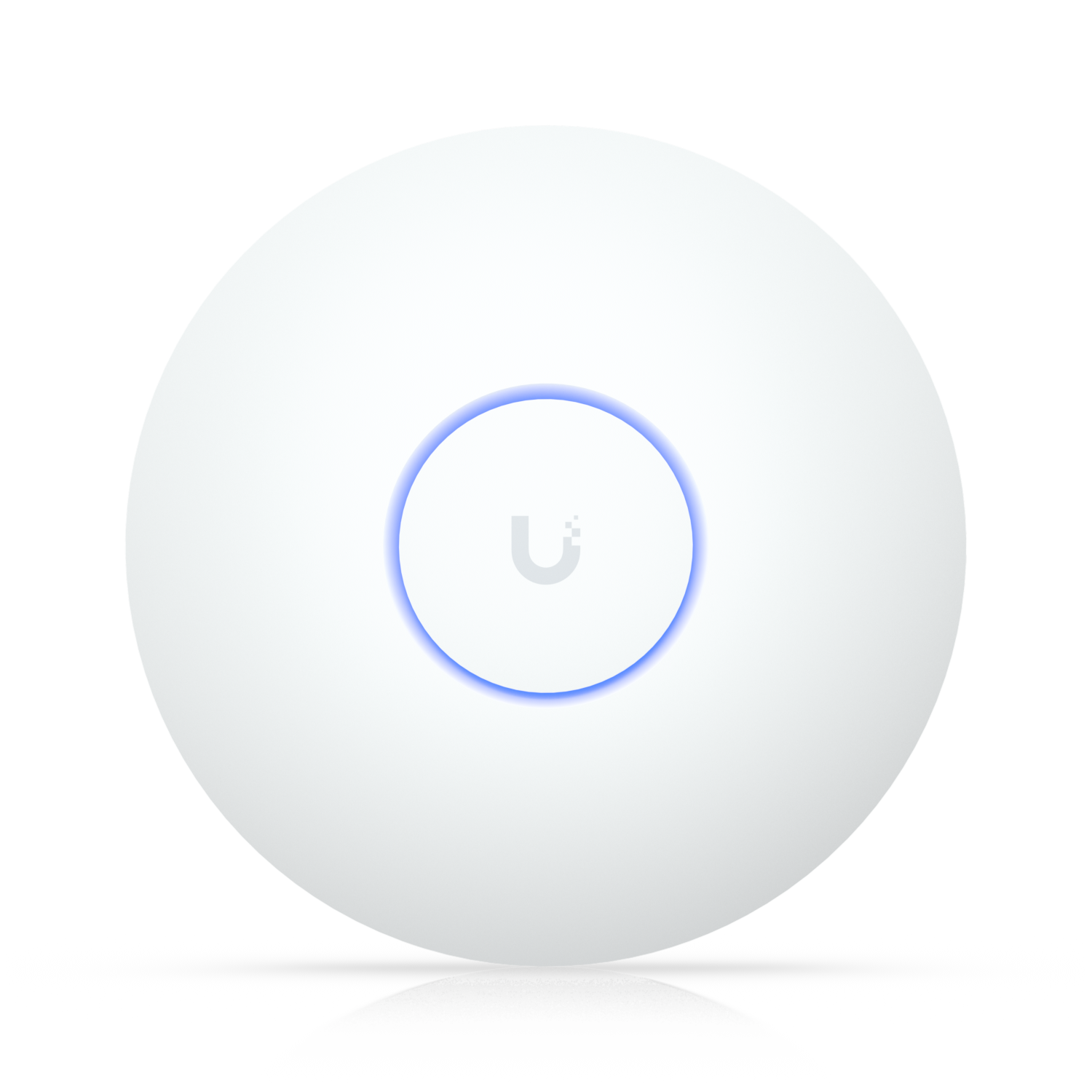
The U7 Long-Range is a WiFi 7 access point tuned for coverage distance rather than peak throughput density. It uses higher-gain antennas to extend signal reach and is the right choice for large single-story buildings, warehouses, open floor plans, or outdoor-adjacent spaces where a standard AP's coverage falls short.
It doesn't outperform the U7 Pro in throughput. It outperforms it in how far that throughput extends before signal degrades.
Why I Recommend It
Standard access points radiate roughly in a sphere. The Long-Range antenna design stretches that coverage pattern to reach farther before the signal falls below the threshold where clients start struggling. In a 3,000 square foot single-floor space, one Long-Range often covers adequately where a standard AP would leave dead spots at the far walls.
For outdoor-facing coverage through glass or thin walls, the additional signal margin means clients connecting from a deck or patio maintain a usable connection rather than marginal WiFi that works unreliably.
Performance & Reliability
At shorter distances, the U7 Pro and U7 Long-Range perform similarly. The difference appears at range, where the Long-Range maintains usable data rates that the standard AP's signal can't sustain. For sparse deployments where APs are placed far apart by necessity, this translates to fewer dead zones.
Same ceiling-mount PoE hardware reliability as other U7 models. The higher-gain antenna design doesn't introduce any unique failure modes.
In high-density client environments, the Long-Range is not the right tool. Its antenna design trades off some multi-client handling for extended reach. Use it for coverage-limited deployments, not density-limited ones.
Setup & Installation
Same adoption process as other U7 models. Placement planning benefits from a quick survey of where signal drops off before mounting. One Long-Range placed centrally often beats two standard APs placed at opposite ends of a long building.
Value for the Money
For rural properties, large single-floor commercial spaces, or homes where running cable to a second AP location is impractical, the Long-Range reduces the number of APs needed. Fewer APs with correct antenna design often outperforms more APs with standard antennas in coverage-limited scenarios.
Don't use this in a dense multi-AP residential deployment hoping for better whole-home coverage. Overlapping standard APs at proper spacing is more effective. The Long-Range is for the cases where proper spacing isn't achievable.
Technical Specs
Connectivity
Wi-Fi, Ethernet, UniFi
Protocols
Use Case
UniFi networks that need reliable wireless access points or building bridges.
Best for