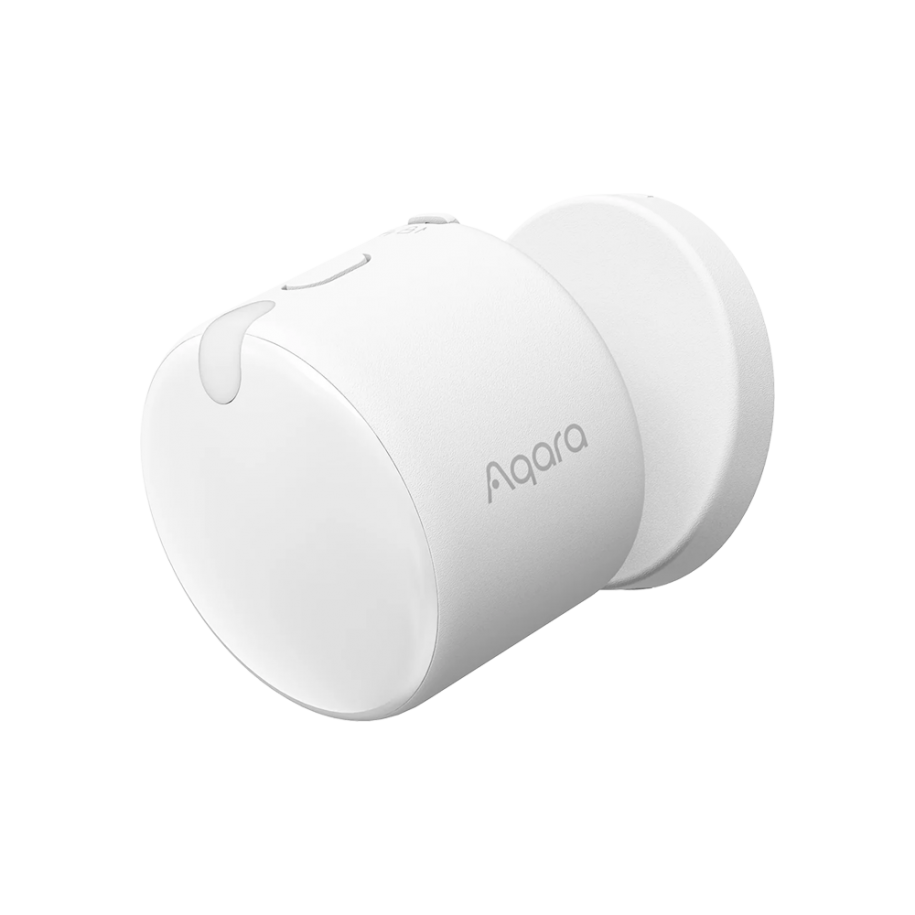
Overview
The FP300 uses mmWave radar to detect whether a person is in a room, including someone sitting still reading or sleeping. Standard PIR sensors trigger on motion and go blind the moment you stop moving, which causes lights to turn off while you're still in the room. The FP300 doesn't have that problem.
It also measures ambient light and temperature, which makes it useful as a combined occupancy and environmental sensor rather than just a presence trigger.
Why I Recommend It
Unlike PIR sensors, this one doesn't lose you when you're sitting still. Radar measures reflected signal patterns, not heat movement, so it can detect the subtle motion of breathing. That's why it's reliable for office desks, reading chairs, and bedrooms where you want lights to stay on even when you're barely moving.
Competing mmWave sensors like the Aqara FP2 or Sonoff SNZB-06P require a hub or have narrower detection zones. The FP300's Thread native support means it joins a Matter network directly, and its multi-zone detection allows you to define up to five separate areas within its coverage field.
Performance & Reliability
Detection latency is under one second. The multi-zone mapping takes fifteen to twenty minutes to configure well, but once calibrated it accurately distinguishes which part of a room is occupied. False positives from ceiling fans or air vents need to be excluded during setup.
mmWave sensors can be sensitive to interference from large moving objects like ceiling fans or curtains in a breeze. The exclusion zone setup in the Aqara app handles most of this, but it takes time to get right.
Thread mesh quality affects response time. If the sensor is at the edge of Thread range, presence detection can become intermittent. Position it where at least two Thread devices are within range.
Setup & Installation
The FP300 requires an Aqara hub or a Thread border router depending on your network. The multi-zone calibration is done through the Aqara app and takes patience. Plan for an hour of testing to get zones dialed in correctly for anything more complex than single-room detection.
Value for the Money
mmWave sensors cost more than PIR alternatives. The FP300 sits at the higher end of the Aqara lineup. What you're paying for is detection accuracy that actually works when you're stationary, plus light and temperature in the same unit.
For automations that need to know if a specific part of a room is occupied, this is hard to beat without spending significantly more on a dedicated radar module. For basic motion-triggered lights in a hallway, a PIR sensor is a fraction of the cost and does the job fine.
Technical Specs
Connectivity
Zigbee, Matter, HomeKit
Protocols
Use Case
Homes that need reliable Zigbee sensors with Matter and HomeKit support.
Best for